Running Many AI Coding Agents in Parallel Without Losing the Plot / May 27, 2026

For most of my career the rule was simple: work one task at a time, because software needs your full attention and multitasking only made everything slower. Coding agents broke that rule. When the agent writes the code, your job shifts from author to manager, and a manager can run several things at once. The new skill is not typing faster. It is supervising more agents without losing track of any of them.
Why parallel agents are hard
The reason multitasking hurt before has not disappeared. It moved. Each agent still needs context in your head: what you asked it to do, what it decided along the way, and how you plan to check its work. Run five at once and you are holding five threads of context, answering questions as they surface, and testing each result. Miss a question and an agent sits idle. Forget the goal and you cannot judge whether it actually succeeded.
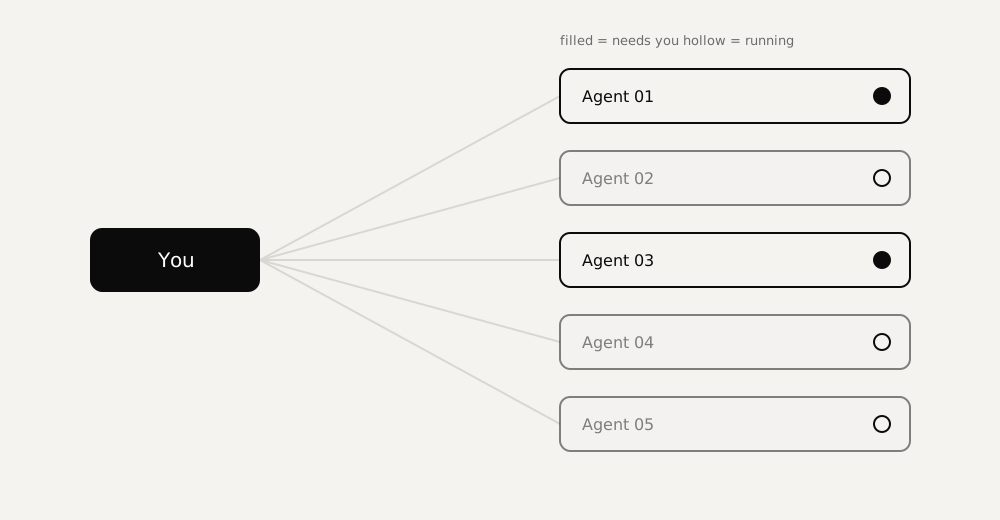
Use an agent overview, not a wall of terminals
The first thing that helped was dropping the habit of one full screen terminal per agent. A combined agent view collapses each session into a single line that shows what is running in the background and what is waiting on you. Claude Code exposes this directly:
claude agents
Instead of hunting across a dozen tabs, you glance at one list and press enter on whatever needs attention.
Get alerted when an agent needs you
An agent that finishes and then waits in silence is wasted time. I mark the sessions that need input so they stand out at a glance, for example a small indicator on the terminal tab. Better still, wire up a hook that plays a sound the moment an agent asks a question. Then you can look away, work on something else, and still know exactly when one needs a decision.
Lean on recaps to reload context
The hardest moment is returning to an agent you set up twenty minutes and four other agents ago. A short recap of what that session was trying to achieve, sitting right above the input box, lets you reload the context in seconds instead of rereading the whole conversation. This single habit does more for parallel work than anything else on this list.
Split panes for the ones you are actively driving
For the two or three agents you are steering closely, split panes keep them side by side so you can compare output and move between them without losing your place. Leave the rest in the background overview until they call for you.
The limit is no longer your typing speed. It is how much context you can hold at once.
Parallelism is a real multiplier, but only if you can keep an honest overview. Give yourself a single place to see every agent, clear signals for the ones that need you, and fast ways to reload context. Do that, and running many sessions stops feeling chaotic and starts feeling like managing a small, fast team.